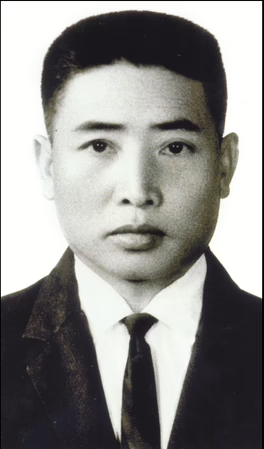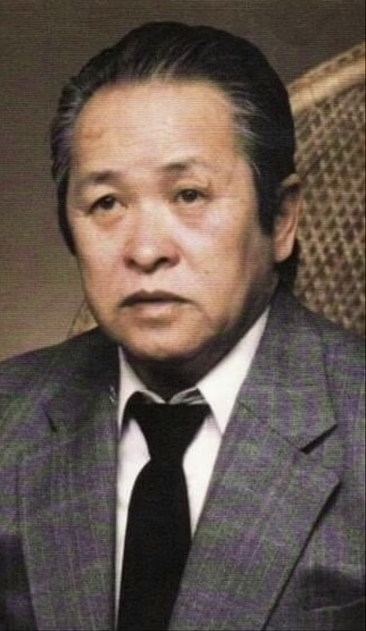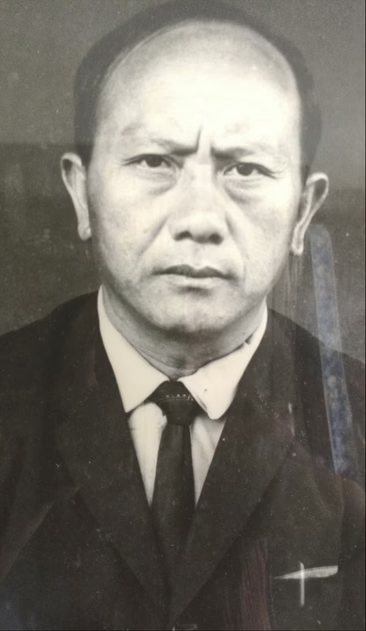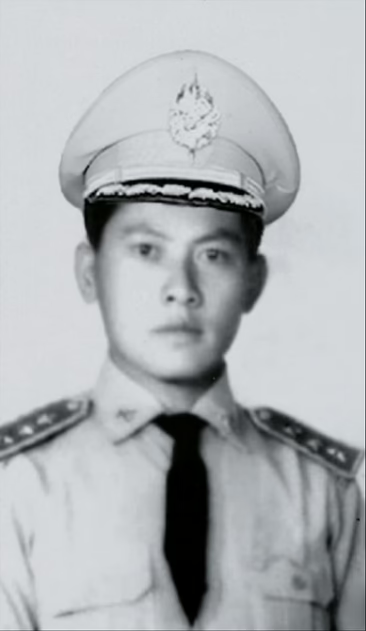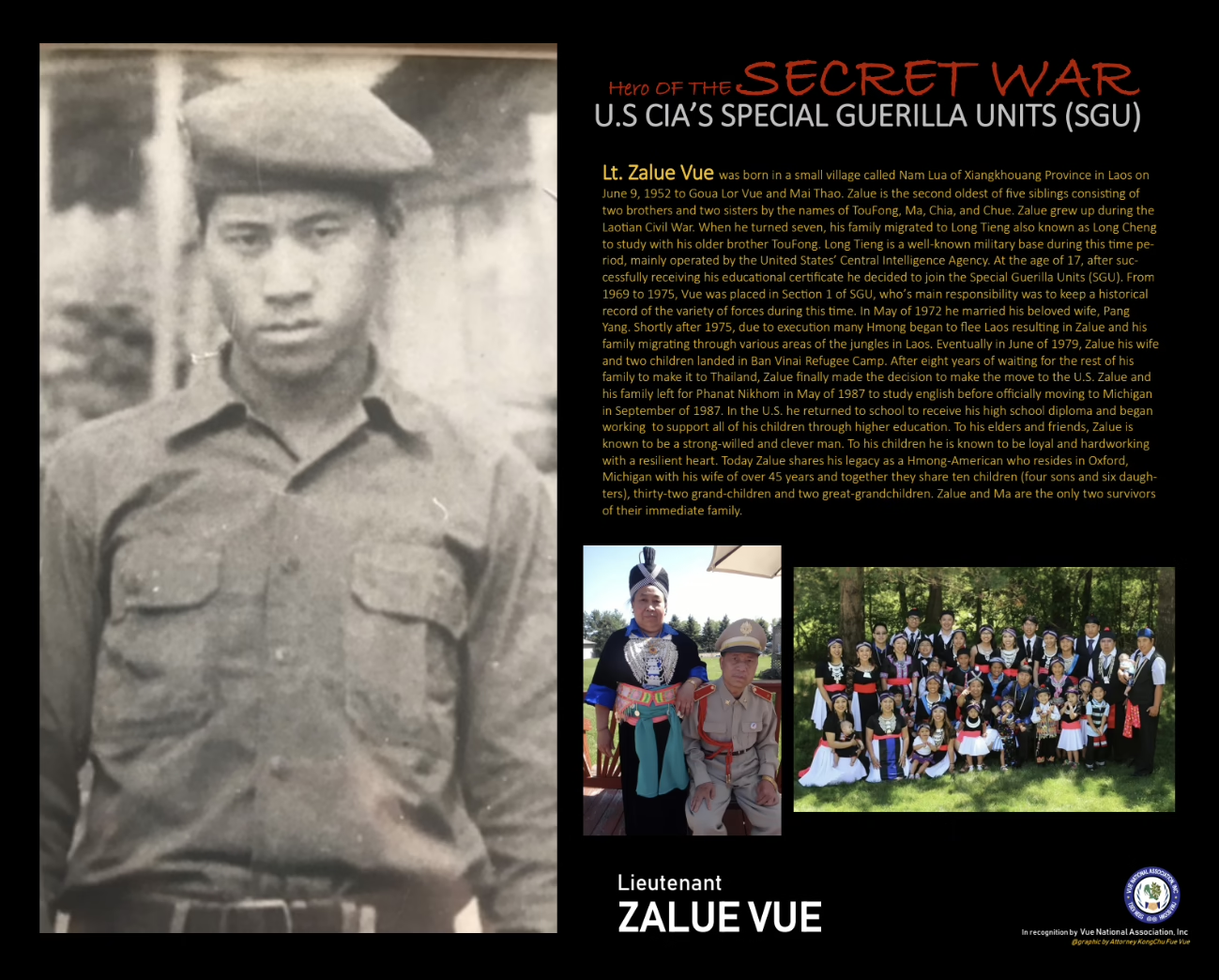
Lt. Zalue Vue

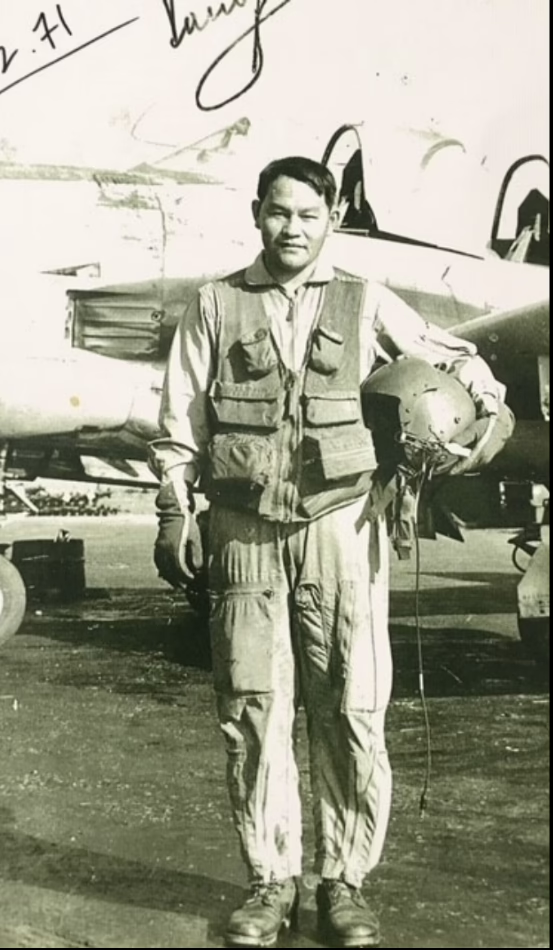
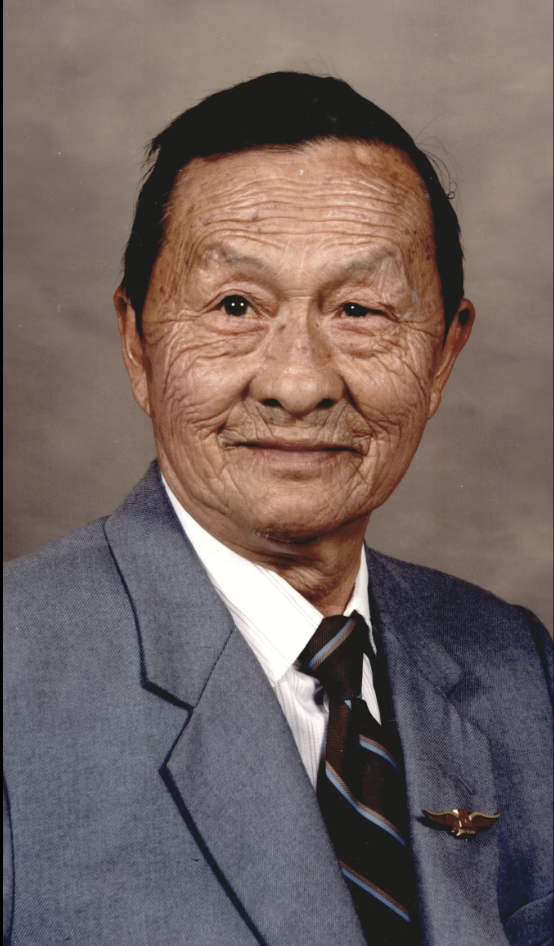
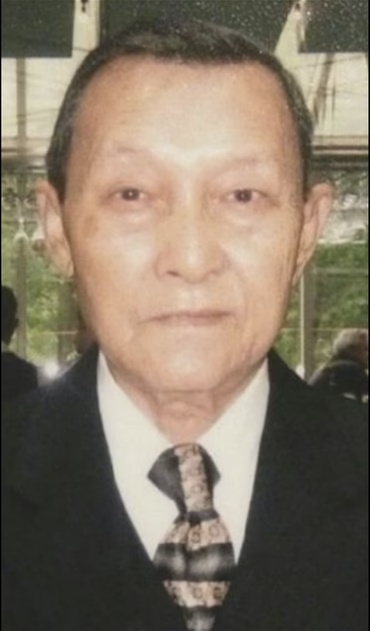
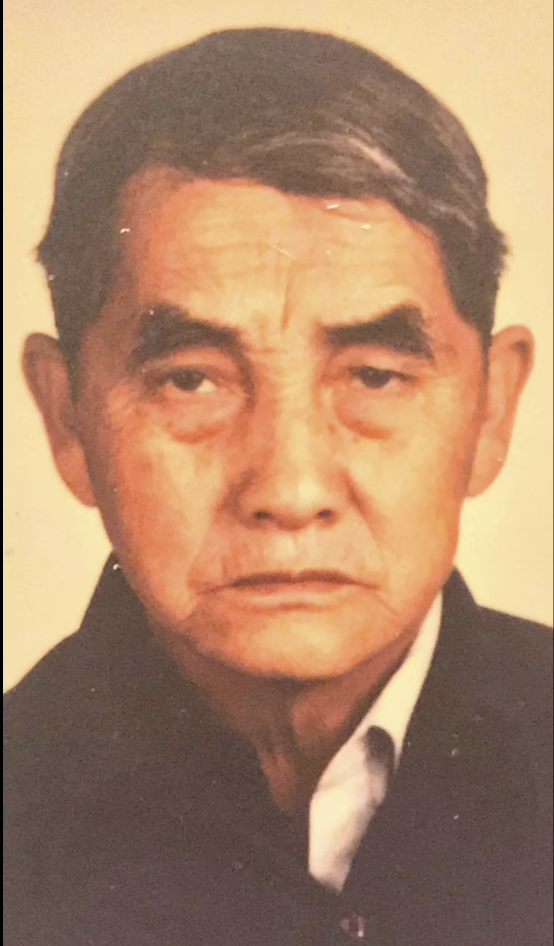
Lt. Zalue Vue was born in a small village called Nam Lua of Xiangkhouang Province in Laos on June 9, 1952 to Goua Lor Vue and Mai Thao. Zalue is the second oldest of five siblings consisting of two brothers and two sisters by the names of TouFong, Ma, Chia, and Chue. Zalue grew up during the Laotian Civil War. When he turned seven, his family migrated to Long Tieng also known as Long Cheng to study with his older brother TouFong. Long Tieng is a well-known military base during this time period, mainly operated by the United States’ Central Intelligence Agency. At the age of 17, after successfully receiving his educational certificate he decided to join the Special Guerilla Units (SGU).

From 1969 to 1975, Vue was placed in Section 1 of SGU, who’s main responsibility was to keep a historical
record of the variety of forces during this time. In May of 1972 he married his beloved wife, Pang Yang. Shortly after 1975, due to execution many Hmong began to flee Laos resulting in Zalue and his family migrating through various areas of the jungles in Laos. Eventually in June of 1979, Zalue his wife and two children landed in Ban Vinai Refugee Camp.

After eight years of waiting for the rest of his family to make it to Thailand, Zalue finally made the decision to make the move to the U.S. Zalue and his family left for Phanat Nikhom in May of 1987 to study english before officially moving to Michigan in September of 1987. In the U.S. he returned to school to receive his high school diploma and began working to support all of his children through higher education. To his elders and friends, Zalue is known to be a strong-willed and clever man. To his children he is known to be loyal and hardworking with a resilient heart.

Today Zalue shares his legacy as a Hmong-American who resides in Oxford, Michigan with his wife of over 45 years and together they share ten children (four sons and six daughters), thirty-two grand-children and two great-grandchildren. Zalue and Ma are the only two survivors of their immediate family.

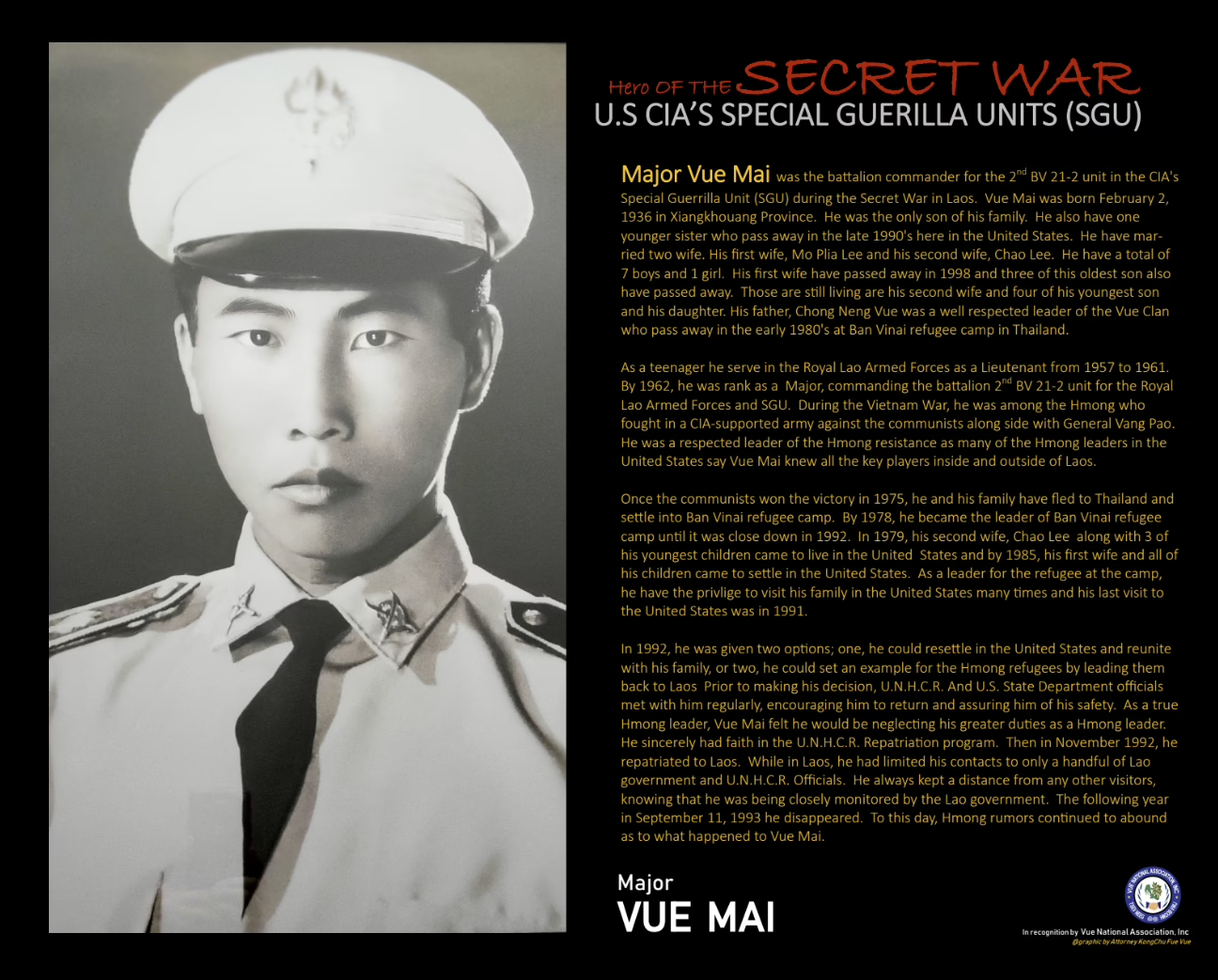
Major Vue Mai

Major Vue Mai was the battalion commander for the 2
nd BV 21-2 unit in the CIA’s Special Guerrilla Unit (SGU) during the Secret War in Laos. Vue Mai was born February 2, 1936 in Xiangkhouang Province. He was the only son of his family. He also have one younger sister who pass away in the late 1990’s here in the United States. He have married two wife. His first wife, Mo Plia Lee and his second wife, Chao Lee. He have a total of 7 boys and 1 girl. His first wife have passed away in 1998 and three of this oldest son also have passed away. Those are still living are his second wife and four of his youngest son and his daughter. His father, Chong Neng Vue was a well respected leader of the Vue Clan
who pass away in the early 1980’s at Ban Vinai refugee camp in Thailand.

As a teenager he serve in the Royal Lao Armed Forces as a Lieutenant from 1957 to 1961. By 1962, he was rank as a Major, commanding the battalion 2nd BV 21-2 unit for the Royal
Lao Armed Forces and SGU. During the Vietnam War, he was among the Hmong who fought in a CIA-supported army against the communists along side with General Vang Pao. He was a respected leader of the Hmong resistance as many of the Hmong leaders in the United States say Vue Mai knew all the key players inside and outside of Laos.

Once the communists won the victory in 1975, he and his family have fled to Thailand and settle into Ban Vinai refugee camp. By 1978, he became the leader of Ban Vinai refugee camp until it was close down in 1992. In 1979, his second wife, Chao Lee along with 3 of his youngest children came to live in the United States and by 1985, his first wife and all of
his children came to settle in the United States. As a leader for the refugee at the camp, he have the privlige to visit his family in the United States many times and his last visit to the United States was in 1991.

In 1992, he was given two options; one, he could resettle in the United States and reunite with his family, or two, he could set an example for the Hmong refugees by leading them back to Laos Prior to making his decision, U.N.H.C.R. And U.S. State Department officials met with him regularly, encouraging him to return and assuring him of his safety. As a true
Hmong leader, Vue Mai felt he would be neglecting his greater duties as a Hmong leader.

He sincerely had faith in the U.N.H.C.R. Repatriation program. Then in November 1992, he repatriated to Laos. While in Laos, he had limited his contacts to only a handful of Lao government and U.N.H.C.R. Officials. He always kept a distance from any other visitors, knowing that he was being closely monitored by the Lao government. The following year
in September 11, 1993 he disappeared. To this day, Hmong rumors continued to abound as to what happened to Vue Mai.

Vue, Long

T28-Lt. Vue, Long (loob) was born on March 17, 1944, to Chong Toua Vue and Lou Yang in the province of XiengKhouang, Laos. Vue Long attended and finished school in Phonsavan, Laos. He then went on to work as an Electrician between 1961-1967. He married his wife Blia Moua in 1962 and began a family. He became a father to one son and four daughters.

In 1967 he began his training as a T-28 Pilot in Udon Thani, Thailand. He was successfully completed his training in 1970 and became a T-28 Pilot for General Vang Pao in early 1971.

During the time of 1968 to 1971 there were very heavy fighting between Laos and Vietnam at the Northern of Laos. Vue Long’s life ended on December 18th, 1971 in the line of duty when the Vietnamese troop shot down his plane.

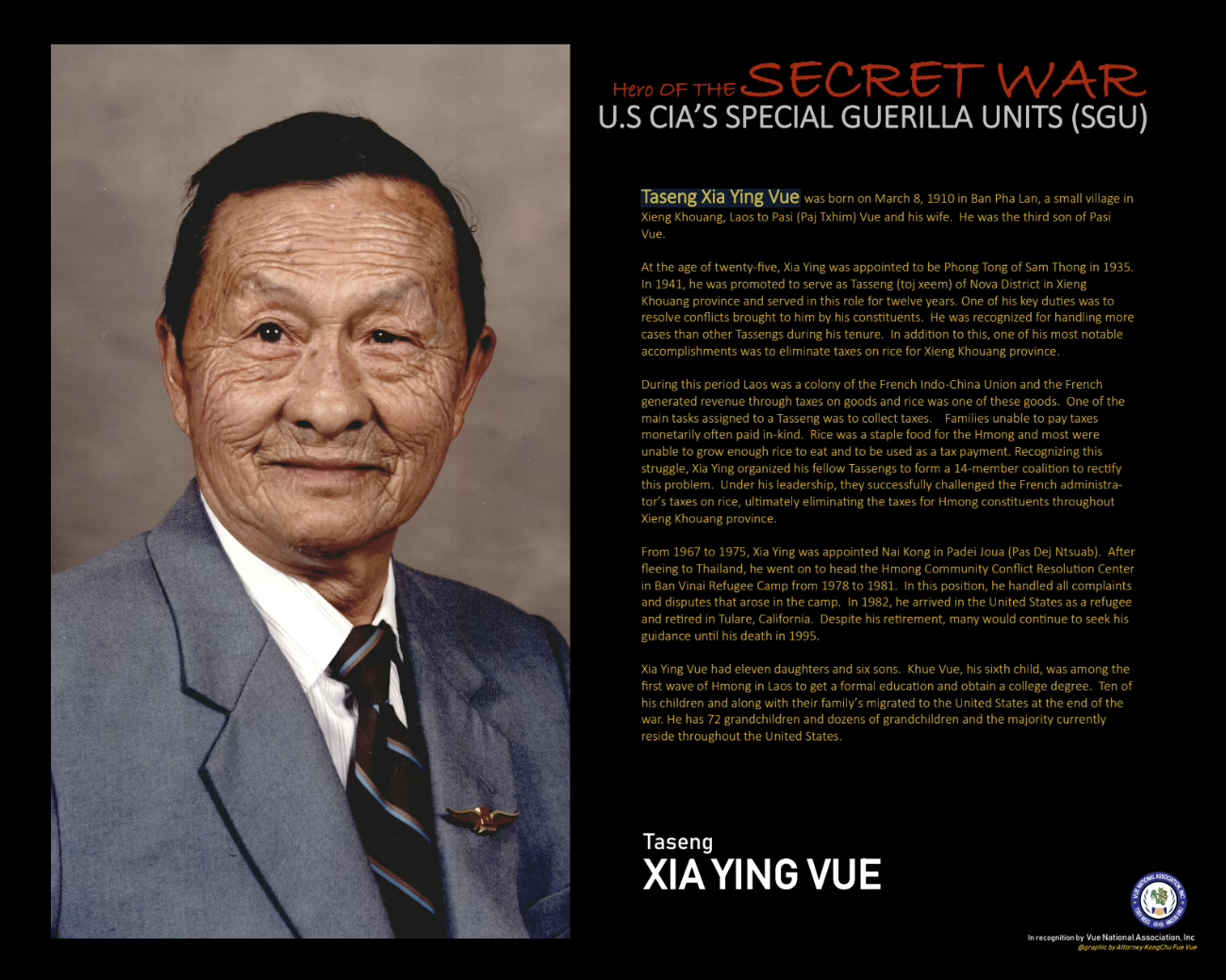
Taseng Xia Ying Vue

Taseng Xia Ying Vue was born on March 8, 1910 in Ban Pha Lan, a small village in Xieng Khouang, Laos to Pasi (Paj Txhim) Vue and his wife. He was the third son of Pasi Vue.

At the age of twenty-five, Xia Ying was appointed to be Phong Tong of Sam Thong in 1935. In 1941, he was promoted to serve as Tasseng (toj xeem) of Nova District in Xieng Khouang province and served in this role for twelve years. One of his key duties was to resolve conflicts brought to him by his constituents. He was recognized for handling more cases than other Tassengs during his tenure. In addition to this, one of his most notable accomplishments was to eliminate taxes on rice for Xieng Khouang province. During this period Laos was a colony of the French Indo-China Union and the French generated revenue through taxes on goods and rice was one of these goods. One of the main tasks assigned to a Tasseng was to collect taxes. Families unable to pay taxes monetarily often paid in-kind. Rice was a staple food for the Hmong and most were unable to grow enough rice to eat and to be used as a tax payment. Recognizing this struggle, Xia Ying organized his fellow Tassengs to form a 14-member coalition to rectify this problem. Under his leadership, they successfully challenged the French administrator’s taxes on rice, ultimately eliminating the taxes for Hmong constituents throughout Xieng Khouang province.

From 1967 to 1975, Xia Ying was appointed Nai Kong in Padei Joua (Pas Dej Ntsuab). After fleeing to Thailand, he went on to head the Hmong Community Conflict Resolution Center in Ban Vinai Refugee Camp from 1978 to 1981. In this position, he handled all complaints and disputes that arose in the camp. In 1982, he arrived in the United States as a refugee and retired in Tulare, California. Despite his retirement, many would continue to seek his guidance until his death in 1995.

Xia Ying Vue had eleven daughters and six sons. Khue Vue, his sixth child, was among the first wave of Hmong in Laos to get a formal education and obtain a college degree. Ten of his children and along with their family’s migrated to the United States at the end of the war. He has 72 grandchildren and dozens of grandchildren and the majority currently
reside throughout the United States.

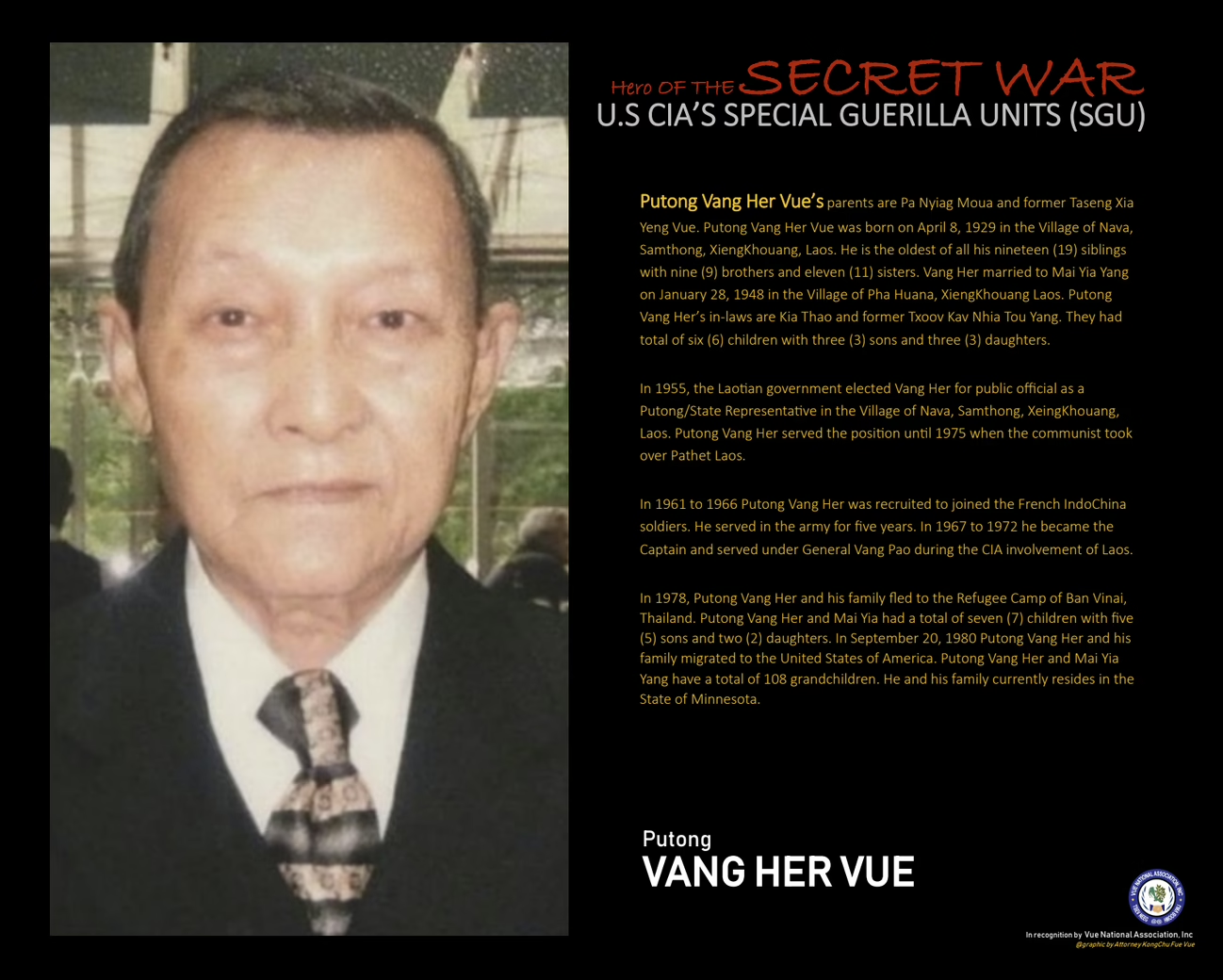
Putong Vang Her Vue

Putong Vang Her Vue’s parents are Pa Nyiag Moua and former Taseng Xia Yeng Vue. Putong Vang Her Vue was born on April 8, 1929 in the Village of Nava, Samthong, XiengKhouang, Laos. He is the oldest of all his nineteen (19) siblings with nine (9) brothers and eleven (11) sisters. Vang Her married to Mai Yia Yang on January 28, 1948 in the Village of Pha Huana, XiengKhouang Laos. Putong Vang Her’s in-laws are Kia Thao and former Txoov Kav Nhia Tou Yang. They had total of six (6) children with three (3) sons and three (3) daughters.

In 1955, the Laotian government elected Vang Her for public official as a Putong/State Representative in the Village of Nava, Samthong, XeingKhouang, Laos. Putong Vang Her served the position until 1975 when the communist took over Pathet Laos.

In 1961 to 1966 Putong Vang Her was recruited to joined the French IndoChina soldiers. He served in the army for five years. In 1967 to 1972 he became the Captain and served under General Vang Pao during the CIA involvement of Laos.

In 1978, Putong Vang Her and his family fled to the Refugee Camp of Ban Vinai, Thailand. Putong Vang Her and Mai Yia had a total of seven (7) children with five (5) sons and two (2) daughters. In September 20, 1980 Putong Vang Her and his family migrated to the United States of America. Putong Vang Her and Mai Yia Yang have a total of 108 grandchildren. He and his family currently resides in the State of Minnesota.

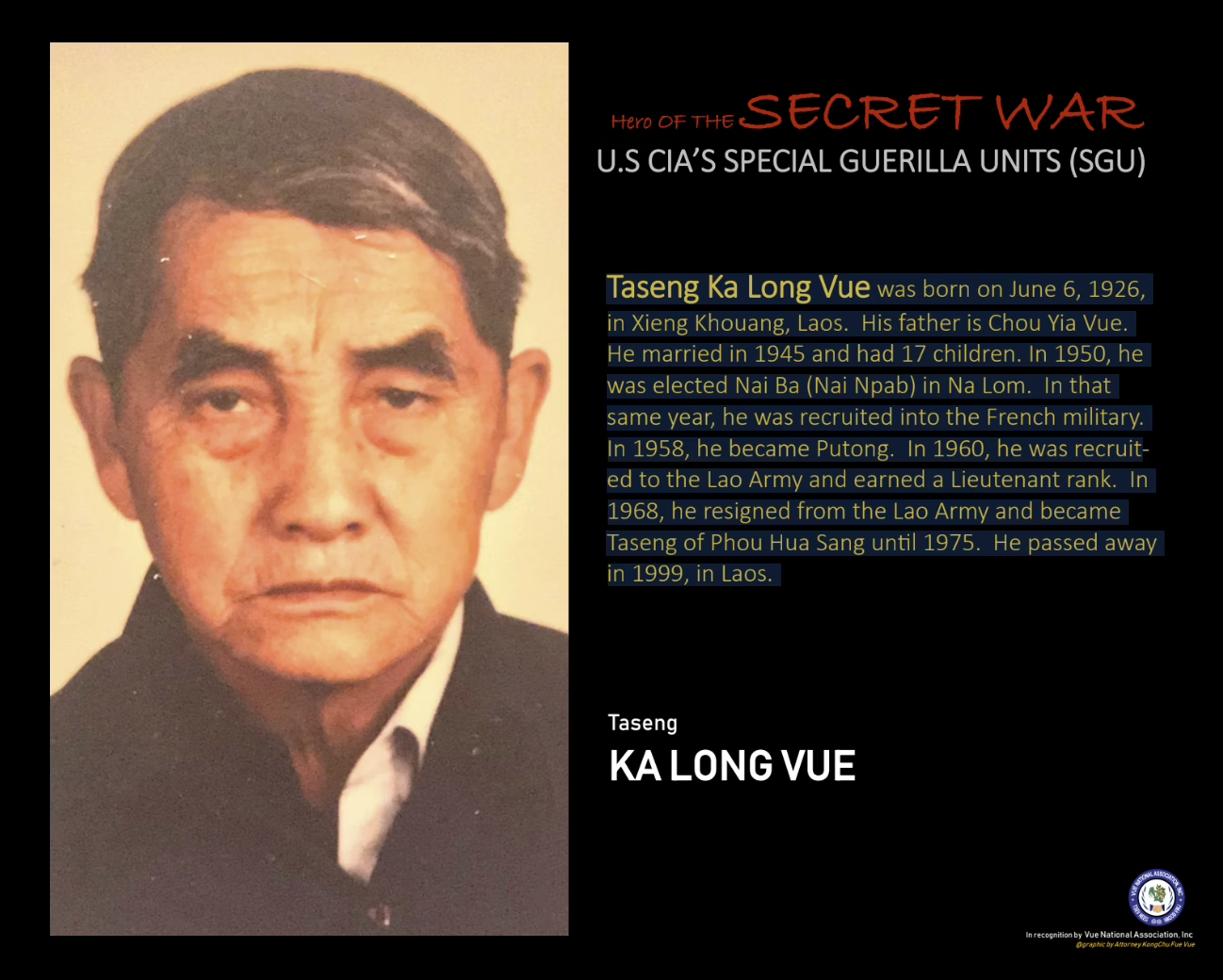
Taseng Ka Long Vue

Taseng Ka Long Vue was born on June 6, 1926,
in Xieng Khouang, Laos. His father is Chou Yia Vue. He married in 1945 and had 17 children. In 1950, he was elected Nai Ba (Nai Npab) in Na Lom. In that same year, he was recruited into the French military.

In 1958, he became Putong. In 1960, he was recruited to the Lao Army and earned a Lieutenant rank. In 1968, he resigned from the Lao Army and became Taseng of Phou Hua Sang until 1975. He passed away in 1999, in Laos.

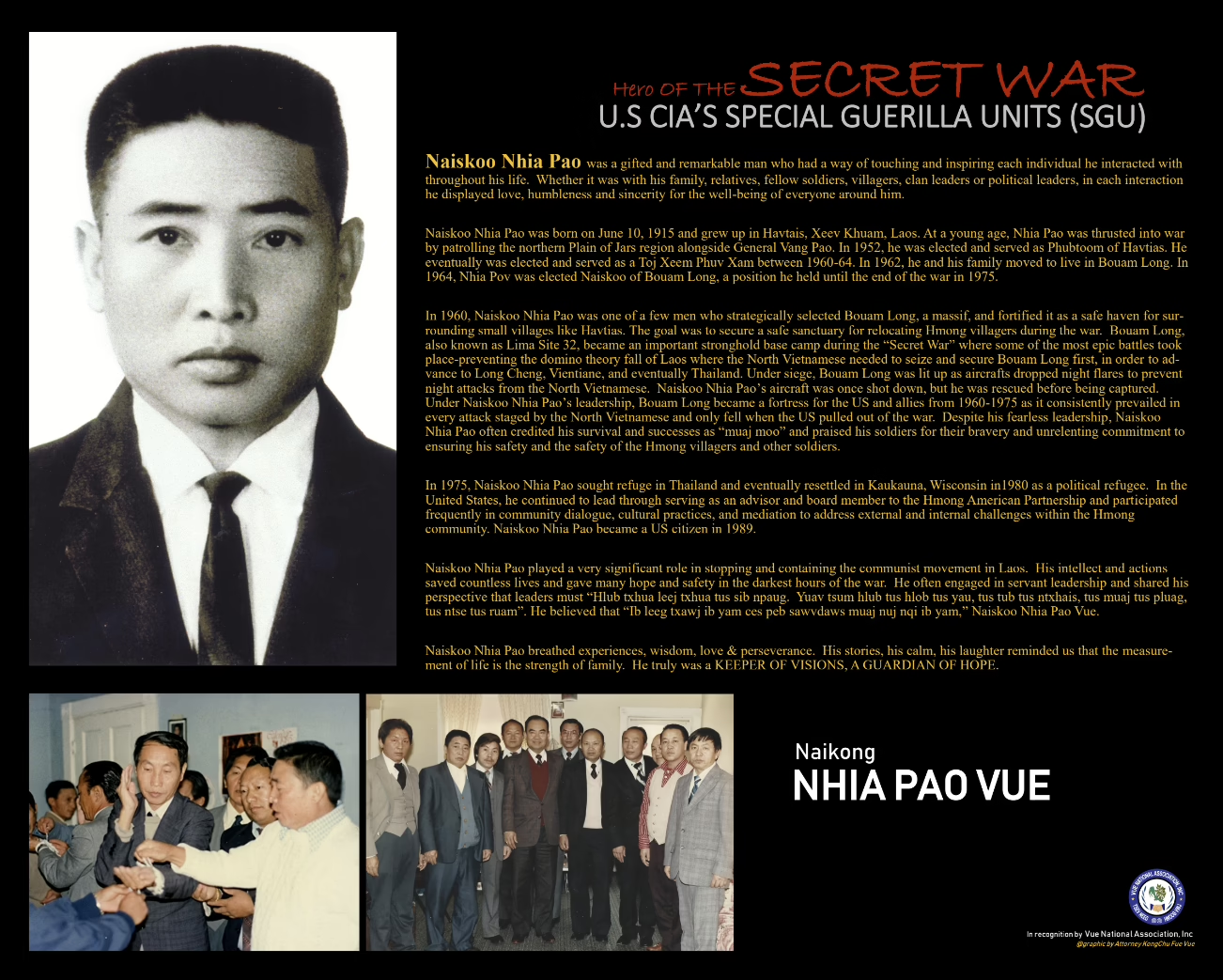
Nais koo Nhia Pao

Naiskoo Nhia Pao was a gifted and remarkable man who had a way of touching and inspiring each individual he interacted with throughout his life. Whether it was with his family, relatives, fellow soldiers, villagers, clan leaders or political leaders, in each interaction he displayed love, humbleness and sincerity for the well-being of everyone around him.

Naiskoo Nhia Pao was born on June 10, 1915 and grew up in Havtais, Xeev Khuam, Laos. At a young age, Nhia Pao was thrusted into war by patrolling the northern Plain of Jars region alongside General Vang Pao. In 1952, he was elected and served as Phubtoom of Havtias. He eventually was elected and served as a Toj Xeem Phuv Xam between 1960-64. In 1962, he and his family moved to live in Bouam Long. In 1964, Nhia Pov was elected Naiskoo of Bouam Long, a position he held until the end of the war in 1975.

In 1960, Naiskoo Nhia Pao was one of a few men who strategically selected Bouam Long, a massif, and fortified it as a safe haven for surrounding small villages like Havtias. The goal was to secure a safe sanctuary for relocating Hmong villagers during the war. Bouam Long, also known as Lima Site 32, became an important stronghold base camp during the “Secret War” where some of the most epic battles took place-preventing the domino theory fall of Laos where the North Vietnamese needed to seize and secure Bouam Long first, in order to advance to Long Cheng, Vientiane, and eventually Thailand. Under siege, Bouam Long was lit up as aircraft dropped night flares to prevent night attacks from the North Vietnamese. Naiskoo Nhia Pao’s aircraft was once shot down, but he was rescued before being captured. Under Naiskoo Nhia Pao’s leadership, Bouam Long became a fortress for the US and allies from 1960-1975 as it consistently prevailed in every attack staged by the North Vietnamese and only fell when the US pulled out of the war. Despite his fearless leadership, Naiskoo Nhia Pao often credited his survival and successes as “muaj moo” and praised his soldiers for their bravery and unrelenting commitment to
ensuring his safety and the safety of the Hmong villagers and other soldiers.

In 1975, Naiskoo Nhia Pao sought refuge in Thailand and eventually resettled in Kaukauna, Wisconsin in1980 as a political refugee. In the United States, he continued to lead through serving as an advisor and board member to the Hmong American Partnership and participated frequently in community dialogue, cultural practices, and mediation to address external and internal challenges within the Hmong community. Naiskoo Nhia Pao became a US citizen in 1989.

Naiskoo Nhia Pao played a very significant role in stopping and containing the communist movement in Laos. His intellect and actions saved countless lives and gave many hope and safety in the darkest hours of the war. He often engaged in servant leadership and shared his perspective that leaders must “Hlub txhua leej txhua tus sib npaug. Yuav tsum hlub tus hlob tus yau, tus tub tus ntxhais, tus muaj tus pluag, tus ntse tus ruam”. He believed that “Ib leeg txawj ib yam ces peb sawvdaws muaj nuj nqi ib yam,” Naiskoo Nhia Pao Vue.

Naiskoo Nhia Pao breathed experiences, wisdom, love & perseverance. His stories, his calm, his laughter reminded us that the measurement of life is the strength of family. He truly was a KEEPER OF VISIONS, A GUARDIAN OF HOPE.

Putong Neng Mai Vue

Putong Neng Mai Vue is the eldest son of Mr. and Mrs. Zoov Txiab Vwj. Born and resided in Nam Lum (Naj Loob) village, and resided in Nam La (Naj Las) village, Toj xeem Phu Hua Xang( held by his cousin Nkaj Looj Vwj), Moung Vang Xai (Now is part of Xaisomboun province), Xiang Khuang Province, Laos. It isunclear exactly when Neng Mai was born but he would be born around the mid 1930s. Neng Mai has three marriages due to his spouses passing away. His first marriage was to Shoua Lee, 2nd marriage was True Yang, and 3rd is Yeng Yang. Most of his descendants lived in Michigan, Minnesota and Wisconsin with a few residing around the USA and Canada.

Neng Mai was known for his excellent leadership in social justice, compassion, quick thinking and good problem solving skills. He was selected to be the village leader (Nai npab) of Nam Lum and Nam La villages at the age 20. In 1958, he was promoted to be a
putong (phub toom) in the region. Putong is a district justice person (similar to a district judge in the USA) for villages in a Toj Xeem. He held the putong title until the fall of Laos to the Communist regime in 1975.

Neng Mai Vue passed away on November 12, 1993 in Lansing, Michigan. Neng Mai has a total of 13 children. Ntxoov Vaj (Koua), Vam Hawj (Fong), Siv Yis (deceased), Vaj Tsheej(deceased), Mai Yaj (deceased), Kia, Neej Vam (Tswj Keej), Nom Tsas, Kab
(deceased), Yub (deceased), Sai (Zeb), Mee Xiong and Mai Yang Vang.

Naikong Blia Yang Vue

Naikong Blia Yang Vue was born on December 5, 1927, in Samthong, Xiengkouang. He was born to Father, Chai Ser Vue, and Mother, Xia Moua.

Positions he held:

  • Nai Npab, Samthong, 1955-1960
  • Putong, Samthong, 1960-1964
  • Naikong, Long Ceeb, 1964-1975

His children are Pang Chai, Nao Long, Nhia Pa, Va Lue, Blia Xa, Cher Lee, Fong, Ka, Mai Kao, Mai Nyua, Xiong Mee, and Mai Sia

Major Ntsuab Pov Vwj